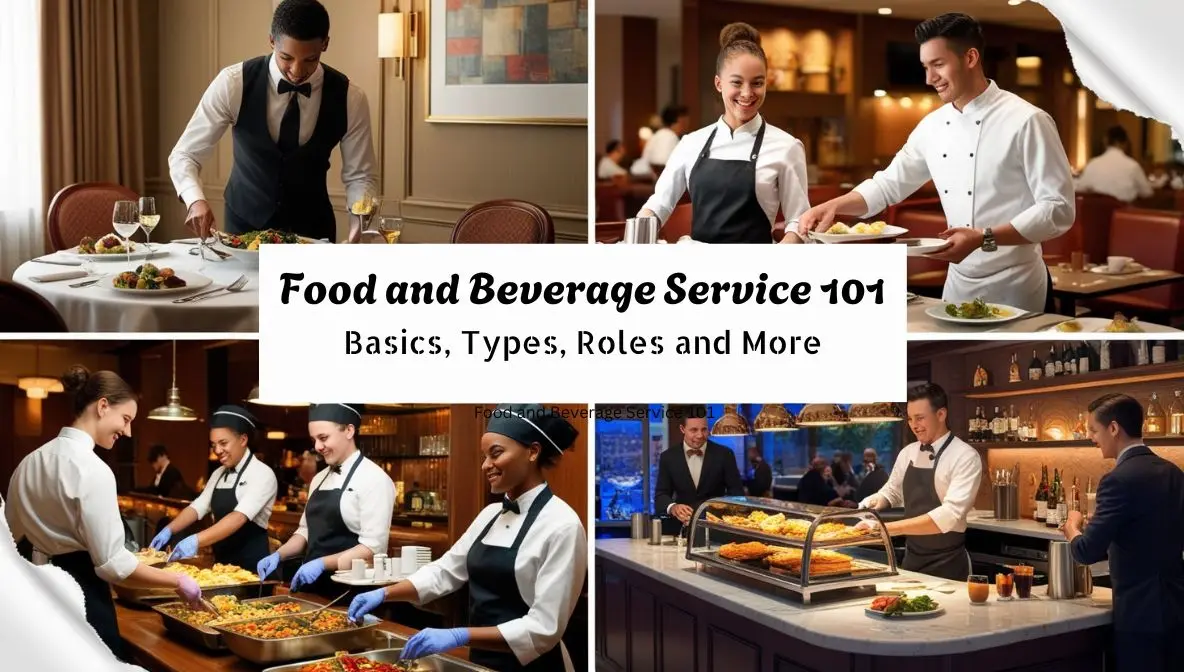

Food and Beverage Service (F&B Service) is one of the most important departments in the hospitality industry. It is responsible for serving food and beverages to guests in restaurants, hotels, resorts, cafes, bars, and other hospitality establishments.
The primary goal of food and beverage service is to provide guests with a pleasant dining experience while maintaining high standards of service, hygiene, and hospitality. It acts as a bridge between the kitchen and the customer, ensuring that food and beverages are delivered efficiently, professionally, and according to guest expectations.
Whether you are a hotel management student learning the fundamentals of hospitality or a hospitality professional seeking to improve service quality, understanding food and beverage service is essential. It influences guest satisfaction, customer loyalty, brand reputation, and overall business success.
In simple terms, food and beverage service is not just about serving food. It is about creating memorable dining experiences through excellent service, effective communication, product knowledge, and attention to detail.
In this guide, you will learn the definition, objectives, types, functions, roles, skills, and importance of food and beverage service in the hospitality industry.
What is Food and Beverage Service?
Food and Beverage Service refers to the process of preparing, presenting, and serving food and beverages to guests in a professional and customer-focused manner.
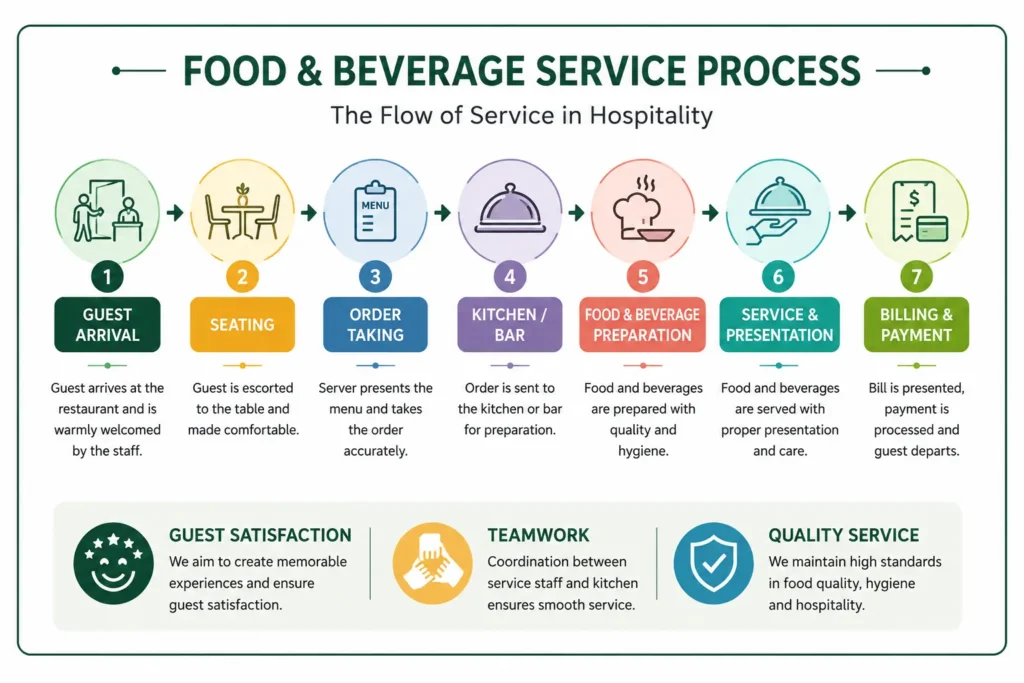
The department is responsible for ensuring that guests receive the right food, at the right time, in the right manner while maintaining quality service standards. It includes all activities related to taking orders, serving food and beverages, handling guest requests, processing payments, and ensuring customer satisfaction.
In hotels and restaurants, food and beverage service plays a vital role in enhancing the guest experience. Even the highest-quality food can fail to impress customers if it is not supported by professional service.
Simple Definition
Food and Beverage Service is the department responsible for serving food and drinks to guests while ensuring customer satisfaction and maintaining hospitality standards.
Key Characteristics of Food and Beverage Service
- Guest-focused operations
- Professional service standards
- Food and beverage knowledge
- Effective communication
- Attention to detail
- Customer satisfaction
- Hygiene and safety compliance
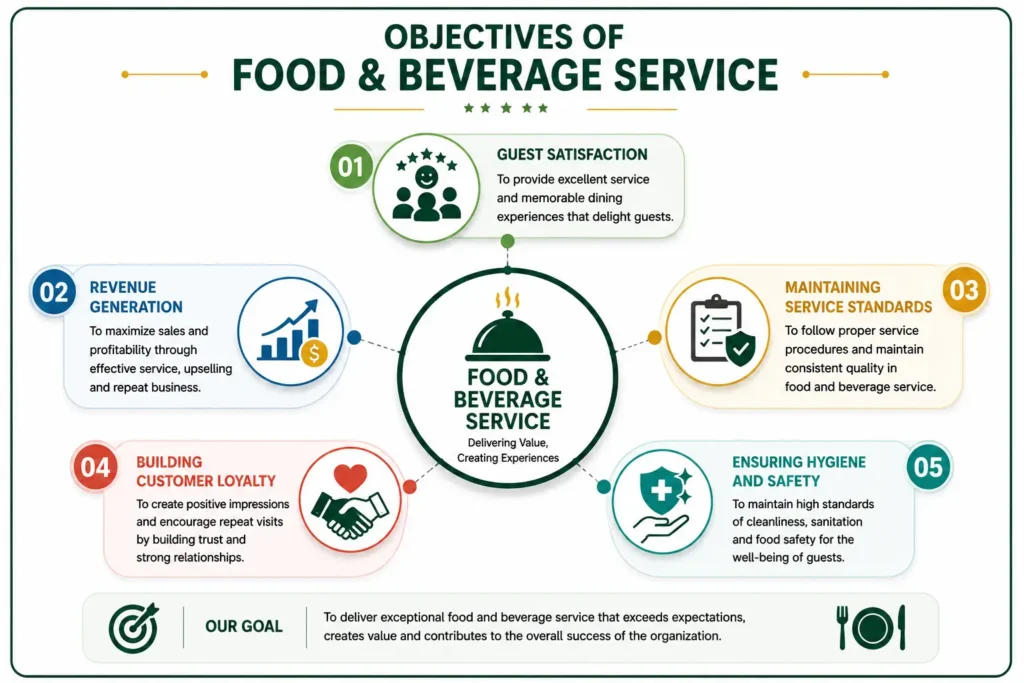
Objectives of Food and Beverage Service
The food and beverage department operates with several important objectives that contribute to the success of hospitality establishments.
1. Guest Satisfaction
The primary objective of food and beverage service is to satisfy guests by providing excellent service and memorable dining experiences. Happy guests are more likely to return and recommend the establishment to others.
2. Revenue Generation
Food and beverage operations are major revenue centers in hotels and restaurants. Effective service helps increase sales through upselling, suggestive selling, and repeat business.
3. Maintaining Service Standards
Hospitality establishments follow specific service procedures and standards to ensure consistency and quality. Food and beverage service staff are responsible for maintaining these standards.
4. Building Customer Loyalty
Excellent service creates positive impressions and encourages guests to become repeat customers. Customer loyalty is essential for long-term business success.
5. Ensuring Hygiene and Safety
Maintaining cleanliness, sanitation, and food safety standards is another important objective of the food and beverage department.
Where is Food and Beverage Service Used?
Food and beverage service is used in a wide range of hospitality and catering establishments. Different operations require different service styles depending on customer expectations and business objectives.
Common areas where food and beverage service is used include:
Hotels and Resorts
Hotels offer multiple food and beverage outlets such as restaurants, bars, coffee shops, banquets, and room service operations.
Restaurants
Restaurants rely heavily on food and beverage service to provide quality dining experiences and maintain customer satisfaction.
Cafes and Coffee Shops
These establishments focus on quick, efficient service while maintaining product quality and customer engagement.
Bars and Lounges
Food and beverage service professionals manage beverage preparation, guest interaction, and service standards.
Banquets and Events
Large-scale events such as weddings, conferences, and corporate functions require specialized food and beverage service operations.
Room Service Operations
Room service allows guests to enjoy food and beverages in the comfort of their rooms while receiving professional hospitality service.
Types of Food and Beverage Service
Food and beverage service can be classified into different categories based on purpose, operation, and service style.
Commercial Food and Beverage Service
Commercial food service establishments operate primarily to generate profit through the sale of food and beverages.
Examples include:
- Restaurants
- Hotels
- Fast-food outlets
- Cafes
- Bars
- Resorts
These businesses focus on customer satisfaction, service quality, and revenue generation.
Non-Commercial Food and Beverage Service
Non-commercial food service establishments provide meals as a support service rather than as a profit-making activity.
Examples include:
- Hospitals
- Educational institutions
- Corporate cafeterias
- Military establishments
- Industrial canteens
The primary focus is convenience, nutrition, and efficiency.
Common Service Styles
Food and beverage service can also be categorised based on the style of service provided.
- Table Service
- Buffet Service
- Room Service
- Banquet Service
- Self-Service
- Cafeteria Service
For a detailed explanation of each service style, read our complete guide on Types of Food and Beverage Service.
[INSERT COMMERCIAL VS NON-COMMERCIAL SERVICE INFOGRAPHIC HERE]
Functions of Food and Beverage Service
The food and beverage department performs several important functions that contribute to smooth hospitality operations.
Serving Food and Beverages
The primary function is to deliver food and beverages to guests efficiently while maintaining service quality and presentation standards.
Taking and Processing Orders
Service staff are responsible for accurately recording guest orders and communicating them to the kitchen and bar.
Coordinating with Other Departments
The food and beverage department works closely with the kitchen, housekeeping, front office, and management teams.
Maintaining Hygiene and Cleanliness
Service areas, equipment, and dining spaces must be kept clean and hygienic at all times.
Handling Billing and Payments
The department processes guest bills, payments, and financial transactions accurately and professionally.
Managing Guest Satisfaction
Food and beverage staff must respond to guest requests, solve service issues, and ensure positive dining experiences.
Objectives of Food and Beverage Service
The primary objective of food and beverage service is to provide guests with a pleasant and memorable dining experience while maintaining high standards of hospitality. Every hospitality establishment aims to satisfy customer needs through quality food, professional service, and efficient operations.
The main objectives of food and beverage service include:
Guest Satisfaction
Guest satisfaction is the foundation of successful hospitality operations. Food and beverage service staff must ensure that guests receive prompt, courteous, and professional service throughout their dining experience.
Revenue Generation
Food and beverage departments contribute significantly to the revenue of hotels, restaurants, and resorts. Through effective service, upselling, and customer retention, the department helps increase overall profitability.
Maintaining Service Standards
Every hospitality establishment follows specific service standards and procedures. Food and beverage staff are responsible for maintaining consistency in service quality, presentation, and guest interaction.
Building Customer Loyalty
Excellent service encourages repeat visits and positive word-of-mouth recommendations. Loyal customers are valuable assets for any hospitality business.
Hygiene and Safety
Maintaining cleanliness, sanitation, and food safety standards is another important objective of food and beverage service. Proper hygiene protects both guests and staff while ensuring compliance with industry regulations.
[INSERT OBJECTIVES OF FOOD & BEVERAGE SERVICE INFOGRAPHIC HERE]
Food and Beverage Department Organization Structure
A well-organized food and beverage department is essential for delivering professional service and ensuring smooth operations. Each employee has specific responsibilities that contribute to the overall guest experience.
F&B Manager
The Food and Beverage Manager oversees the entire department, including restaurants, bars, banquets, room service, and catering operations. They are responsible for planning, budgeting, staffing, and maintaining service standards.
Restaurant Manager
The Restaurant Manager supervises the daily operations of the restaurant, ensures customer satisfaction, and manages service staff.
Captain or Supervisor
The Captain or Supervisor coordinates service activities, assists staff, and ensures that service procedures are followed correctly.
Steward or Waiter
Stewards are responsible for taking orders, serving food and beverages, and interacting directly with guests.
Host or Hostess
The host or hostess welcomes guests, manages reservations, and escorts customers to their tables.
Bartender or Barista
Bartenders and baristas prepare and serve beverages while maintaining quality and presentation standards.
[INSERT F&B DEPARTMENT HIERARCHY CHART HERE]
Skills Required in Food and Beverage Service
Success in food and beverage service requires a combination of technical knowledge and interpersonal skills. These skills help professionals provide excellent customer service and maintain hospitality standards.
Communication Skills
Food and beverage professionals interact with guests, colleagues, and management on a daily basis. Clear communication helps ensure accurate orders and positive guest experiences.
Customer Service Skills
Providing friendly, professional, and attentive service is essential for guest satisfaction and customer retention.
Product Knowledge
Service staff should have a thorough understanding of menu items, beverages, ingredients, and service procedures to assist guests effectively.
Time Management
Food and beverage operations often involve busy service periods. Effective time management helps staff handle multiple tasks efficiently.
Teamwork
Hospitality is a team-oriented industry. Food and beverage staff must work closely with kitchen personnel, supervisors, and other departments to ensure smooth operations.
Professional Appearance
Maintaining proper grooming and professional presentation reflects positively on the establishment and enhances guest confidence.
Problem-Solving Skills
Service staff should be able to handle guest complaints, special requests, and unexpected situations professionally and efficiently.
FAQs
What is food and beverage service?
Food and beverage service refers to the process of preparing, presenting, and serving food and beverages to guests in restaurants, hotels, resorts, and other hospitality establishments. Its primary goal is to provide excellent customer service and create a memorable dining experience.
What are the objectives of food and beverage service?
The main objectives of food and beverage service are guest satisfaction, revenue generation, maintaining service standards, building customer loyalty, and ensuring hygiene and safety in hospitality operations.
What are the functions of food and beverage service?
Food and beverage service functions include taking orders, serving food and beverages, coordinating with the kitchen, maintaining cleanliness, handling guest requests, processing payments, and ensuring customer satisfaction.
What are the types of food and beverage service?
Food and beverage service can be classified into commercial and non-commercial service. Common service styles include table service, buffet service, room service, banquet service, cafeteria service, and self-service.
Where is food and beverage service used?
Food and beverage service is commonly used in hotels, restaurants, resorts, cafes, bars, banquet halls, cruise ships, airlines, hospitals, educational institutions, and corporate cafeterias.
What skills are required in food and beverage service?
Important skills include communication, customer service, product knowledge, teamwork, time management, problem-solving, and professional grooming.
Stay Updated
Subscribe and join our community of hospitality professionals & students — get insights, tips, and the latest updates delivered straight to your inbox!