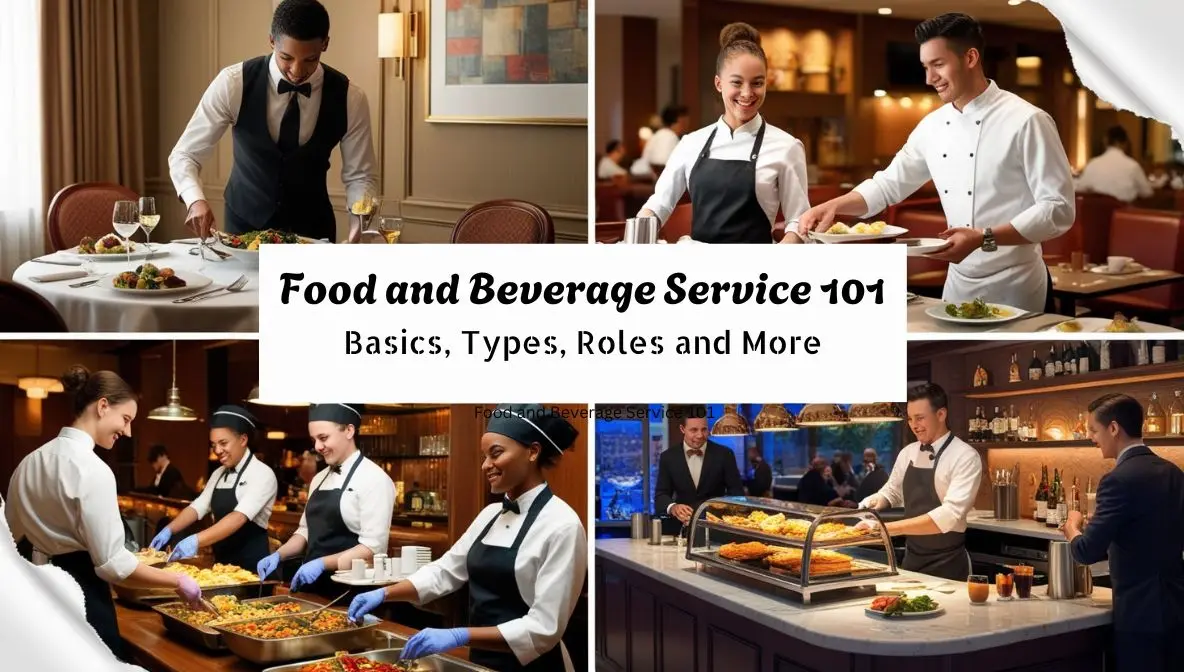

Food and Beverage Service (F&B Service) is one of the most important departments in the hospitality industry. It involves the preparation, presentation, and serving of food and drinks to guests in places like restaurants, hotels, resorts, and catering establishments.
Whether you are a hotel management student learning the basics or a hospitality professional looking to improve service quality, understanding food and beverage service is essential. It plays a key role in creating guest satisfaction, maintaining service standards, and ensuring a smooth dining experience.
In simple terms, food and beverage service is not just about delivering food—it is about providing a complete dining experience through proper service techniques, communication, and attention to detail.
In this guide, you will learn the definition of food and beverage service, its main types, functions, and why it is so important in the hospitality industry.
What is Food and Beverage Service? (Definition)
Food and Beverage Service refers to the process of preparing, presenting, and serving food and drinks to guests in a professional manner.
It acts as a bridge between the kitchen and the guest, ensuring that every dish is delivered with proper timing, presentation, and service etiquette.
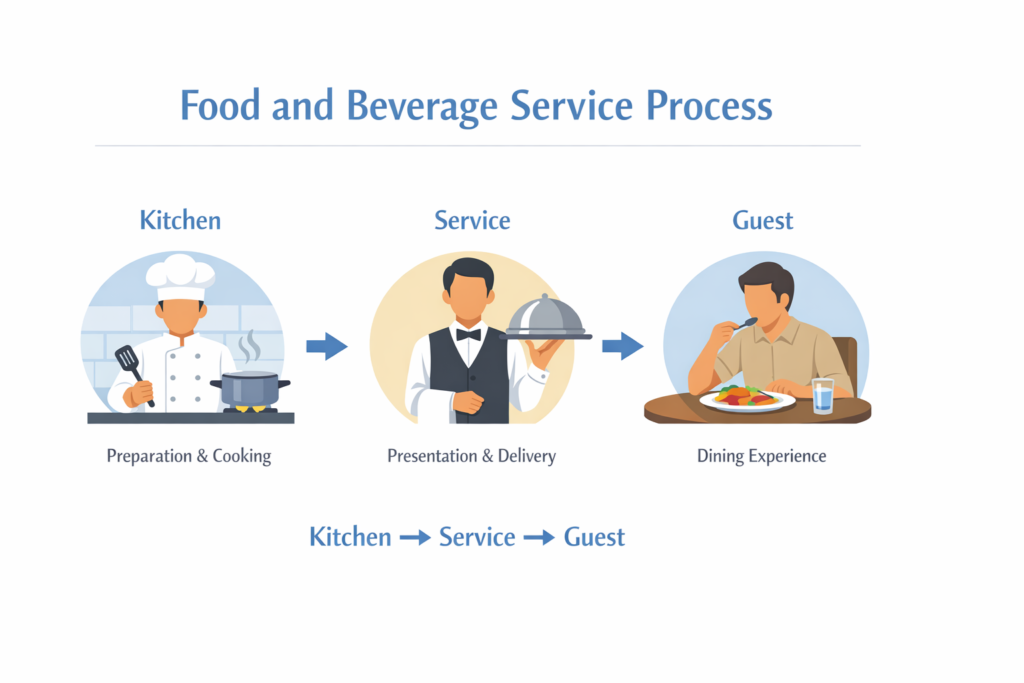
Where is Food and Beverage Service Used?
F&B service is used in many types of hospitality establishments. Each setting follows different service styles depending on the type of operation and customer expectations.
Common places where F&B service is used include:
- Restaurants and fine dining outlets
- Hotels and resorts
- Cafes and coffee shops
- Bars and lounges
- Banquets and events
- Room service operations
Types of Food and Beverage Service
Food and beverage service can be broadly divided into two main categories based on purpose and operation.
Commercial F&B Service
Commercial service is provided in establishments where food and beverages are sold for profit. The main goal is to provide excellent service while generating revenue.
For example, restaurants, fast food outlets, coffee shops, and bars fall under this category. These businesses focus on customer satisfaction, quality service, and profitability.
Non-Commercial F&B Service
Non-commercial service is provided in institutions where food is served as a support function rather than for profit.
Examples include hospitals, schools, and corporate canteens. The main focus here is convenience, nutrition, and efficiency rather than revenue generation.
In simple terms, commercial service focuses on profit, while non-commercial service focuses on service support.
📊 Infographic Suggestion (Add Here)
👉 Insert infographic: “Commercial vs Non-Commercial F&B Service”
Functions of Food and Beverage Service
The food and beverage department performs several important functions to ensure smooth operations in any hospitality business. These functions help maintain service quality and improve guest satisfaction.
Some of the key functions include:
- Serving food and beverages in a timely and efficient manner
- Maintaining hygiene and cleanliness standards
- Ensuring a positive guest experience
- Coordinating with the kitchen and other departments
- Managing orders and billing processes
Roles in Food and Beverage Service
A well-structured team is essential for delivering professional service. Each role in the F&B department has specific responsibilities that contribute to overall efficiency.
The common roles include:
- F&B Manager – Oversees the entire department
- Restaurant Manager – Manages daily operations
- Captain / Supervisor – Supervises service staff
- Steward / Waiter – Serves food and interacts with guests
- Host / Hostess – Welcomes and seats guests
- Bartender / Barista – Prepares beverages
Each role is important for a smooth and professional service.
📊 Infographic Suggestion (Add Here)
👉 Insert infographic: “F&B Department Hierarchy Chart”
Skills Required in Food and Beverage Service
To succeed in food and beverage service, a combination of technical and soft skills is required. These skills help staff interact with guests professionally and deliver high-quality service.
- Communication skills
- Professional appearance
- Knowledge of service techniques
- Customer handling skills
- Time management
Both technical and soft skills are equally important.
Importance of Food and Beverage Service
Food and beverage service plays a crucial role in the success of hospitality businesses. It directly affects how guests perceive the overall experience.
Good service enhances guest satisfaction, builds a strong brand image, increases revenue, and encourages repeat customers.
Guests may forget the food, but they never forget the service.vice.
Modern Trends in F&B Service
The food and beverage industry continues to evolve with changing customer preferences and technology.
Today, there is a growing focus on healthy food options, digital ordering systems, and sustainable practices. These trends are shaping the future of F&B service and making it more dynamic..
Conclusion
Food and beverage service is a core part of the hospitality industry that focuses on delivering quality service and creating memorable dining experiences. From basic service techniques to modern trends, understanding F&B service is essential for both students and professionals.
FAQs
What is food and beverage service in simple words?
Food and beverage service means serving food and drinks to guests in a professional and customer-friendly way.
What are the types of food and beverage service?
The main types are commercial and non-commercial food and beverage service.
Why is food and beverage service important?
It improves customer satisfaction, enhances guest experience, and helps businesses grow.

Subscribe and join our community of hospitality professionals & students — get insights, tips, and the latest updates delivered straight to your inbox!